This blog serves as a platform for a hypothetical investigation of international opportunities for the Otago Chocolate Company (OCHO) rooted in New Zealand. The company is planning on extending its business with a potential Market Entry in Dar Es Salaam in Tanzania. In the following weeks, we will assess all relevant factors that are essential for a successful Market Entry in Dar Es Salaam. A demographic, economic as well as a cultural profile will be established, travel and budget requirements will be assessed, solutions for cultural challenges will be laid out and the implications for the marketing strategy of the company will be analyzed.
Now that we have returned from our business trip to Dar Es Salaam, Tanzania´s largest and busiest city, it is now time to share our experiences and impressions. We met diverse people, had unique experiences and enjoyed the amazing local food. Although we are glad to be back home in our beautiful country, the city´s charm and its spectacular harbor and shopping malls are highlights that continue to linger in our minds.
Our research had highlighted that Dar Es Salaam is the second-fastest-growing city worldwide, but it was difficult to imagine how that would look like. But once we arrived, the immense population and economic growth became evident. The city was extremely busy 24/7, with crowded streets and malls, the constant extension of infrastructure with construction sites on every corner and most importantly, the city was crawling with tourists from all around the globe. From low- to middle- to upper-, we came across natives from all social classes. However, we did notice that just like in most cities, middle- and upper-classes were located in the city center and in the quarters nearby the ocean. As these parts of Dar Es Salaam are also hotspots for tourists and contain high-end hotels, we found these areas most favorable for the purpose of selling our premium chocolate. We also found visual confirmation for the demographic data indicating a young population, as the majority of the city seemed to be below 25, representing an attractive potential customer base for our company. Just like in our country, the locals use the internet frequently and are on their cellphones browsing the world wide web most of the time. Social media presence is widespread, giving OCHO the opportunity to engage potential customers with e-marketing and offering a platform for the implementation of direct exporting. We also evidenced the increasing purchasing power of locals, as we paid attention to their shopping carts in supermarkets. Against our expectations, they were not buying the cheapest brand or limiting their shopping to only necessary goods, but they did not hesitate to grab products from the upper shelves and bought several disposable goods such as hair care products, soft drinks and confectionery.
Now to the language aspect: Due to the touristic attractiveness of the city, most locals knew English and seemed to enjoy being able to communicate with visitors. However, I would like to point out that they seemed to be struggling with our language and always switched to Swahili when talking among themselves. The potential business partners we met up with were more fluent with English, but it was admittedly a little difficult to communicate with them with professional English designations, especially in discussions about terms and conditions of prospective contractual agreements.
Yes, the chocolate market is significantly smaller than ours in NZ. However, the forecasted annual growth by almost 12% still makes it an attractive market for our small company. We should additionally bear in mind the exponential population growth Dar Es Salaam is expected to have within the next few years, making it likely that the chocolate market will develop similarly in the ongoing megacity. A booming increase in demand for chocolate was also confirmed to us by retailers and business partners. At this point, I would like to emphasize that our trips outside of the city showed that chocolate demand is majorly present in the big cities of the country, whereas in rural and semi-urban areas there is a lack of interest for these sweet delights. This is why OCHO should limit their focus for future business plans to Dar Es Salaam.
It has become evident that entering the market will benefit OCHO in many ways. The company will gain valuable strategic knowledge, increase their cultural sensitivity, build a deeper understanding of foreign markets and expand their network of business partners within an emerging city going through a substantial economic shift. Nevertheless, the locals show tendencies towards choosing chocolate made of local cocoa beans to support the local farmers. Due to the strong national pride and support of the locals for Tanzanian farmers, I strongly suggest an entry with a new chocolate sort made of Tanzanian beans. Without this kind of sort, I do not see a bright future for OCHO in their local market, as we will most likely not be able to compete against local competition offering high-quality chocolate from local cocoa beans. Our advantages of special bean-to-bar technique and fair sourcing of our beans from the Pacific will not be sufficient if our products do not directly appeal to the Tanzanian culture. We were met with Kokoa Kamil regarding this matter and they are ready to strike a fair deal with us for their quality cocoa beans farmed from all around Tanzania. Since they have a prominent reputation within their country, having their brand name on the packaging of our new sort will draw additional attention to our products. We can still send our original sorts along as well, but the Tanzanian cocoa sort is our ignition cord to attract the attention we need for initiating the first purchases of the locals. After raising awareness for our products, it will be crucial to continuously communicate the special values of our products, which I extensively described here. For tourists, the Tanzanian bean sort would also be perceived as the more attractive variation. See it from their point of view: If you visit a country, you would want to purchase products with local ingredients rather than foreign, because you would want to achieve the best possible experience of the country, right?
Our products and labels have already been approved and certified by the TFDA, so that is one less formality to worry about. We found a reliable translator who is creating a Swahili text version of our label context which we can add below the English original.
Finding the right business partners proved to be a rather difficult task. We noticed that most of them were suggesting doing business with unpopular retailers and when we asked why they felt that this would be beneficial for our products, they could not give us a reasonable answer. Their counsel seemed biased and based on long-lasting relationships. One of them even admitted that the suggested business belongs to his cousin. Nevertheless, we refused to give up and found a licensed local lawyer to address and minimize corruption in business deals and overcome bureaucratic obstacles. In addition, he also provided valuable information on businesses that can be trusted and thanks to him, we found several agents and retailers that had reliable and concrete suggestions with supporting numbers. They were also willing to share their essential market insights with us. The various inputs were compliant with each other, so we added them to our official travel report. We also received an overview of the estimated costs of import that we handed to our Finance department to calculate a suitable market price.
To achieve and maintain market success, it will be important to cultivate these relationships and confirm business contracts with our Tanzanian lawyer beforehand. This task will be time-consuming but manageable. Delegating our distribution and parts of our promotion to businesses that are already familiar with the cultural patterns and values is the right choice to achieve our first sales. Due to the low required investment and low overall risk of this entry mode, my recommendation of entering the market with direct and indirect Exporting would remain unchanged under normal circumstances.
But the current exceptional state of our world is anything but normal and the extent of the recent development of COVID-19 was not foreseeable during our business trip. Without a doubt, this pandemic will have a significant impact on the global economy, which is why I do not recommend initiating a market entry as of now. Let us maintain tied business relationships and closely monitor international economic development. If our world recovers from the pandemic within the next year and there are no crucial changes in the Tanzanian market that would imply for OCHO to abjure their market entry, I recommend planning for entry in June 2021. Why June out of all months? That month is the start of the touristic season in Dar Es Salaam. Increasing our chances of successful market entry by waiting for a time period when 1,5 million people enter the potential customers pool can certainly do no harm.
Going international with a business and successfully selling products and services can pave way for many challenges. At some point in time, we all heard of several multinational corporations making costly mistakes when trying to sell to foreign consumers due to lack of awareness of cultural patterns and wrong decisions regarding adaptation or standardization of their marketing mix. Yes, global uniformity and standardization create various benefits for an organization, such as cost reductions provided due to economies of scale and reduced marketing operational costs. However, by choosing a standardization strategy, one fails to acknowledge that different markets entail different consumer preferences. Let us take a moment to remember the challenges Walmart faced when entering foreign markets such as Germany, Japan and South Korea. Their recipe for success that worked so well for them in the US (wide range of merchandise, inventory controls and low price tags) failed to achieve the same level of success, as shoppers had different habits and the local discount chains had already built a strong position for themselves on the market. They failed to inflict US values globally which lead to a fatal loss for the retail giant. This is just one of many reference points to bear in mind before making the big decision of how to balance standardization and customization. Based on what we learned about Tanzania so far, let us now think about which parts of our Marketing Mix require adaptation.
Product Is there a way we can offer the appearance of customization in our product offering while ensuring that we do not run into an insane amount of cost and avoid scaring people away with an unreasonably high price tag? In order to figure this out, we have to become aware of what makes our product special. Our premium chocolate is made of beans, not cocoa powder. Only a very small group of manufacturers in the chocolate world produce their chocolate in this manner. Furthermore, the usage of very few ingredients with no unnecessary additives enables us to deliver a unique taste explosion. These details add special value to our products that we should make sure to maintain in any case, as they already differentiate us from the competition. So what might come in question for possible customization to achieve a higher likeliness of product success?
A new chocolate sort We previously found out that Tanzanians are very attached to their own lands and culture. They are proud people who enjoy supporting their local manufacturers to achieve overall economic growth for the company. Therefore, in order to attract their attention, I suggest we consider creating a new chocolate sort for our market entry, with Tanzanian cocoa beans instead of Pacific ones. The resources for this we could get from the organization Kokoa Kamili, that is based in the Morogoro Region around a 10-hour drive from Dar Es Salaam. They sell Tanzanian certified high-quality cocoa to premium chocolate manufacturers. By paying above-market prices for their cocoa resources from around 2000 local farmers, they are promoting the growth of the Tanzanian cocoa sector, thus contributing to the economic growth of the country. These are motives that we could use to promote our products and attract local consumers. I reckon this would not be causing a big issue in our production, as we would only have to exchange our Pacific beans with the Tanzanian ones and create a new, suitable picture for the packaging. Furthermore, I feel like this collaboration would really benefit our cause, as seven chocolate sorts that have been produced with Kokoa Kamili beans have been announced winners of the 2019 International Chocolate Awards. If this is a considerable option for our manager, I will make sure to schedule a meeting with Kokoa Kamili for our business trip to discuss further steps. For the packaging colors of this new product, I suggest using either black or soft blue color, due to the symbolism of colors in Tanzanian tradition that I previously discussed in this article.
Labeling A question we need to ask ourselves is whether we will have to adapt our labels due to the regulatory restrictions in Tanzania. I have read TFDA guidelines and could not find any indicators for changes we would have to make, as our current labels seemed compliant with their requirements. However, we will have to await the confirmation from TFDA to be 100% sure about this point and we should take into account that we might have no choice but to adopt a few elements of labeling if the TFDA requires for us to do so.
Language and Pictography Independent of the labeling content itself, I strongly suggest we add a Swahali translation of the ingredients, as it is the official national language and English is used primarily in the areas of commerce, administration and higher education. Due to the adult female literacy rate of 73% within the country, I suggest we become more mindful of the pictures we pick for our packaging. Our salted caramel chocolate, for example, is represented by a squid due to its sea salt ingredient. However, people who can not read and are not familiar with our culture might think we added chunks of squid to our product.
Customer Service I suggest we set up a separate email address for a Tanzanian customer service on our .co.tz website that we are planning to create. To process these mails, we might look into hiring at least one Tanzanian employee who is fluent in Swahili as well as English. We will also need their language skills to promote our products adequately. You might think ´Why do we need to hire someone who is fluent in Swahili if we have Google Translate´? Language has multiple layers, and some words translated 1:1 can be perceived in a completely different way in a different language. Just take Pepsi for example, who debuted their slogan ´Pepsi Brings You Back To Life´ in China with a wrong translation stating ´Pepsi Brings You Back from the Grave´. Language flops like this one can be crucial for the international success of the organization and their occurence can compromise brand reputation, so let us try to avoid them by getting a native speaker on board.
PLACE Since both direct and indirect Exporting was selected as the most suitable entry method for the Tanzanian market, our products will be distributed via e-commerce and retailers. At this point of time, there is no reason for differentiating ourselves from the local competition by opening up an own store. We have neither the financial resources nor the international experience to make an OCHO store work to our advantage, so we will go with standard distribution channels for our market entry. In respect to the market research I have laid out in this blog, I recommend limiting our distribution region to Dar Es Salaam. We may also find a suitable wholesaler during our business trip. Wholesalers might have recommendations, but let us bear in mind that their suggestions might be biased due to long-lasting relationships or bribery. I therefore suggest we do our own research before we blindly follow their advice.
I already investigated on google and selected following stores as possible places of distribution: 📍 Shoppers Plaza Supermarket, Dar Es Salaam, Mikocheni Reasoning: Suitable due to central location, their Mission is to be associated with the highest quality products 📍 The Deli shop, Dar Es Salaam, Oysterbay Reasoning: Oysterbay is an affluent neighborhood 📍 Relish Café, Dar Es Salaam, Oysterbay Reasoning: Rated as one of the Top 10 cafés in the city 📍 Garden Market, Dar Es Salaam, Masaki Reasoning: Greengrocer selling fresh products to middle / upper class
We should also try to get in touch with some shops at the Julius Nyerere Airport to see if there is any chance of distributing our products. In addition, I suggest that we look into distributing our products in some high-end hotels´ gift shops once we´re there, possibly at Sea Cliff, Serena and Hyatt Regency Hotel. Alternatively, we might strike a good deal with them to lay out our samples as room gifts for their hotel guests.
Price Depending on the product, our local prices vary around 11,20 to 12,80 NZD (15,600-17,800 Tanzanian Shillings) per 100g of chocolate. In comparison, Chocolate Mama´s product costs around 22,600 TZS per 100g while the price of Kaitxo and Aruntam´s chocolate amounts to ~30,100 TZS per 100g. [Please note that the prices have been checked from Germany and might therefore have been customized automatically according to location]. The price comparison shows that we sell below the price of our competitors, but we have to consider all the additional costs that will affect our business due to new market entry. This involves markup for distributors and/or retailers and other costs for certification, currency exchange, transportation and insurance. Furthermore, we have established that customization will be necessary to a certain extent, which will require additional resources. Long story short, we will definitely have to customize our prices for the Tanzanian market. The Finance Department will calculate a manageable entry price range after our business trip, however, I suggest (and hope) that we can stay below the price of Chocolate Mama, as the locals are very keen on supporting the brand due to the brand´s regional support, as I had explained beforehand.
PROMOTION Due to our selected Market Entry Method, retailers and their sales force will do most of our promotion in their leaflets, posters and customer care. However, we will be only one of many brands in their assortments, which is why we should try to differentiate ourselves and take additional measures into our hands to promote our products in the local markets.
Communication Channels As I have mentioned in this article, the number of Tanzanian internet users is seeing a huge growth and 82% of users use their cellphones to access the world wide web. This is why, besides setting up a separate OCHO website for our Tanzanian market with co.tz designation, we should also make sure to create a mobile-compatible version that automatically adapts the website content to the screen format when being accessed via cellphone. Furthermore, we might look into translating the website into Swahili with the help of the suggested Tanzanian employee. In addition, it is worth considering whether or not we should set up separate social media channels for our Tanzanian audience on Facebook on Instagram or keep those channels standardized. I suggest the latter, but I feel like each post should contain a Swahili translation underneath the original text, which yet again, the Tanzanian employee(s) could help us arrange. We should also create some publicity around our market entry via local online newsletters such as The Citizen – maybe they are interested in writing an article about our products entering their market or maybe they might invite us for an interview? Their offices are located in Dar Es Salaam, so we should see to pay them a visit.
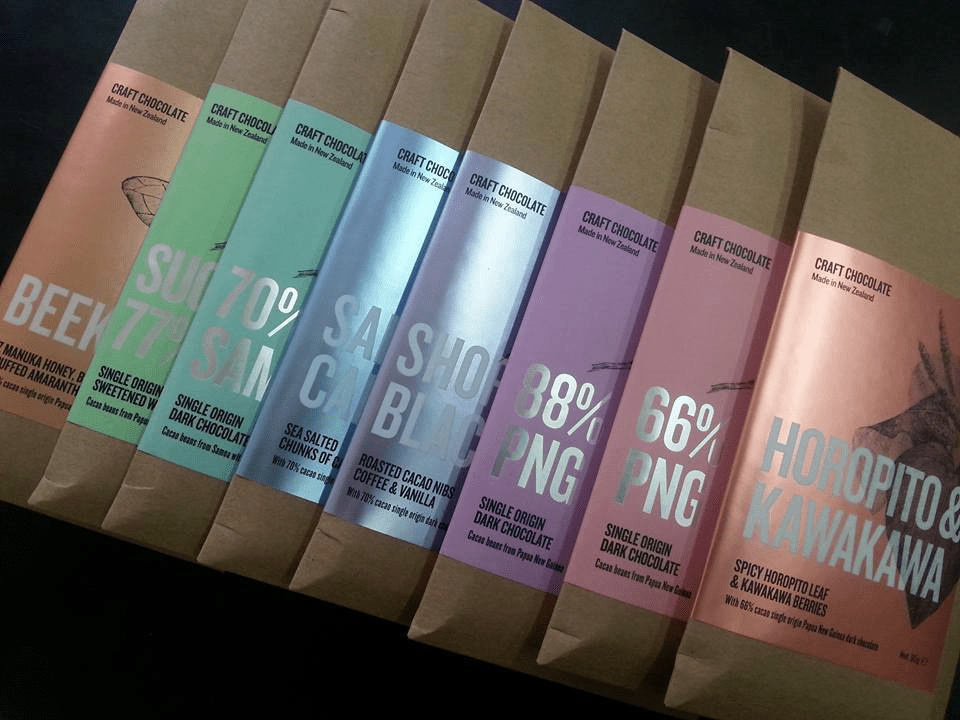
Communication Content Now that we have laid out suitable communication channels, let us have a look at the content we would like to communicate to our audience. For one, we should definitely advertise what makes our products so special from ´regular´ chocolate, to justify our premium prices. Therefore, our bean-to-bar chocolate crafting technique with only a very few ingredients should definitely be the main focus of our marketing messages, highlighting the undeniable quality of our delights, which is displayed visually on this following drawing:
We should also spill the beans about our cacao nibs being sourced via fair trade, ensuring the farmers get paid fairly for their work and are enabled to maintain a sustainable business. An additional aspect we could consider to communicate is that our dark chocolate won two NZ chocolate awards in 2018, underlining our strong position in our local market. These communication contents should be tailored in a way that they can be easily understood by Tanzanians, making sure that their cultural norms and values are considered and adressed.
To summarize, bits and pieces of each Marketing Mix tool require customization to be adjusted to the Tanzanian market and effectively work to OCHO´s advantage. This balanced solution between standardization and customization might be time-consuming and difficult to achieve as we are taking our first steps into a culture that is completely foreign to us. However, I am confident that respecting local specifications and expectations will help our brand build a reputable image and make customers feel noticed, while still allowing monitoring of our marketing activities from afar.
“The customer expects you to have knowledge of their stuff, not just your stuff”
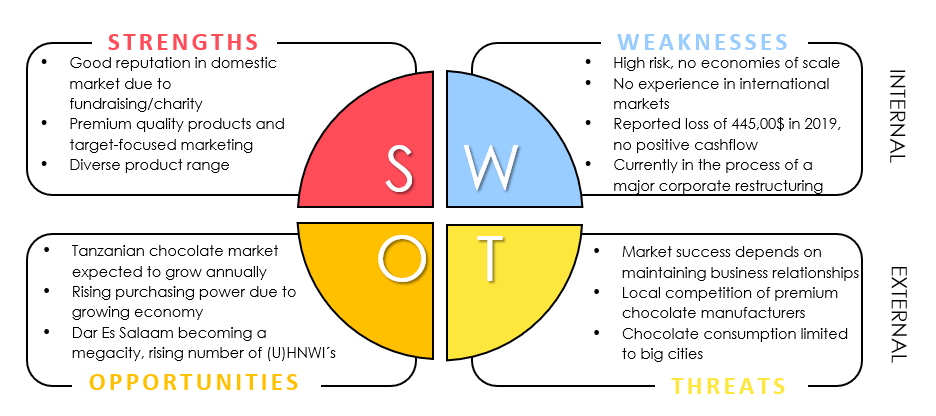
We constantly hear about ambitious market entries by big companies taking a wrong turn. In fact, market experts say that according to business history reports, four out of five market entries fail. This fact underlines that market entries can be challenging, and while the market entry might seem viable on paper, several uncertain factors will influence the actual success of the entry. Overall, companies that are successful in their domestic market tend to find their way across the globe if they have an outstanding product, which OCHO definitely has. But the fact is, the more different the culture in the foreign market to the domestic market, the bigger the risk of developing a wrong market entry strategy, so planning this step will be crucial for OCHOs success or failure in the foreign market. A beneficial entry will require a thorough understanding of the market, its competitive and regulatory environment and its consumer behaviors. To prepare you for better understanding each entry mode´s benefits and disadvantages for OCHO, I gathered the most important points from the previous articles to create a SWOT analysis, which provides an overview of our company´s strengths and weaknesses relevant to the market and of the opportunities and threats the Tanzanian market offers.
Let us now try to decide on a well-thought-out market entry strategy based on the information we gathered. The entry modes differ around the point of cost, risk and amount of control that remains to the entering company.
Analysis of Entry Modes
Direct / Indirect Exporting Exporting is the fastest and most risk-free way to enter the Tanzanian marketplace and involves establishing a distributorship with a distributor or agent in Tanzania. This would enable us to draw advantage of their local knowledge, as they have the necessary experience for local distribution. However, we may lose control of the way our products are marketed and priced in the foreign market, which might negatively influence the outcome of our market entry and harm OCHO´s reputation. A thorough analysis of the distributor´s business objectives and its historic development is therefore indispensable. Please note that in Tanzania it is not rare that wholesalers are also operators of supermarket chains and shopping malls, so this might be a considerable option for us at a later point in time. We may alternatively decide to directly export to consumers in Tanzania via e-commerce, which would enable us to build relationships with customers from our domestic base and maintain control over distribution. For this method to be taken into consideration, we should take into account the availability of internet access in Tanzania: According to Reuters, the number of internet users in Tanzania rose up to 23 million in 2017, which amounts for around 41% of the population (from only 16% in the previous year), whereas around 82% of those internet users access the world wide web via their mobile phones. These numbers indicate that internet access for Tanzanians is rising exponentially, making e-commerce and direct marketing via web a considerable option for OCHO. If we decide on this option, I suggest we also consider creating a separate website for secure credentialing of our Tanzanian customers with a .co.tz ending. Please consider this a necessity, as credit card usage is still minimal within the country. If we go with the exporting option, I recommend doing a combination of both direct and indirect exporting, as people are more likely to purchase online if they already got the chance to see, touch and taste the product beforehand. This entry mode comes with some disadvantages that require consideration. For example, if our products do not get certified or licensed by the TFDA, this entry mode will not be an available option for OCHO, as TFDA approval is a requirement for import permission. Another negative aspect of the Exporting entry mode is that we will be faced with exchange rate fluctuations and trade barriers such as tariffs, as New Zealand has no free trade agreement with Tanzania.
Greenfield Venture To have more control over the distribution process, we may look into establishing a corporate presence in Tanzania with a Greenfield Venture as a separate legal entity / subsidiary through the Business Registration and Licensing Agency (Brela). Brela approves registration of entities only if objectives are set in a compliant way with international reference classification of productive activities (ISIC), which allows providing a set of business activity categories that can be utilized for collection and reporting of such business activities. So as we can see, this entry mode requires a lot of bureaucracy costs and time to set up. It should further be considered that the income of our legal entity would be taxed 30% by the Tanzanian government. Among all entry modes, this is the one that would grant us the most control at the Tanzanian market, but is that really wise? I strongly advise against this entry mode, as OCHO lacks the experience to get a positive outcome of this entry strategy and the cultural differences between our markets are simply too high to be pulling this off. In addition, this mode entails a great amount of risk as we will be directly investing and committing to the Tanzanian market.
Acquisition An Acquisition requires a similarly high investment as Greenfield Venture and would involve us gaining control over a Tanzanian company through purchasing the majority of their assets or ownership equity. This might have been an appealing entry mode for OCHO, as it allows quick access to a new market through a well established local company. Furthermore, it enables working with established operations the locals are familiar with. But since this procedure is very expensive and we do not possess the necessary resources, this strategy seems out of reach for OCHO.
Strategic Alliance We may also consider entering the market through a Strategic Alliance with one or more Tanzanian companies. This is typically done with a contractual agreement and the main objective is to cooperate for a certain time in order to achieve common objectives while the partaking firms remain independent. This would enable us to preserve our autonomy while gaining advantages through the sharing of resources, thus reducing risk. It would also enable us to take advantage of our partner firm´s experience with the local culture, market and Tanzania´s way of doing business. If the partner is chosen wisely, we may also benefit from their existing relationships with local customers and in addition, being associated with a recognized, reputable brand name can certainly do no harm. Possible negative effects could be that integration problems between the two corporate cultures may occur (which is very likely given the big cultural differences) and that the required investment might be higher than the costs of exporting.
Joint Venture Through the U.S. Foreign Commercial Service I found out that the Tanzanian government encourages Joint Ventures between foreign investors and local companies. A joint venture is a form of business organization that is set up by two or more companies for the purpose of achieving a particular task or project. This method entails the same benefits as a Strategic Alliance. Complimentary assets can benefit both sides and sharing objectives also entails sharing risks, rewards and regulatory requirements such as financial and insurance.However, some negative consequences of this method might be being bound to strict terms and conditions as well as possible conflicts between the two companies.
Another market entry possibility would usually be Franchising or Licensing. However, we will not be looking into these options as our CEO clarified that at this point in time, OCHO is not a mature enough company to be having proprietary assets given to independent business owners.
The Market Entry Suggestion All facts considered, Exporting seems OCHO´s best go-to option for the Tanzanian Market Entry and its first sales. The main reason for this conclusion being that our company does not have enough funds or experience to be able to afford high-risks strategies on a foreign market as of now. Any other entry method requires more investment, and as OCHO is still to recover from the losses of the past business years, we do not have the necessary positive cashflow to be investing large sums into a Greenfield Venture or an Acquisition.
Our first evident step on our business trip should be to ensure that our products are approved by the TFDA to make sure we have the legal green light for this entry mode. I will make sure to set up an appointment with the TFDA in our first week in Tanzania. I am confident that during our business trip we will find suitable agents or distributors who will take care of exporting and promoting our products in the foreign market. In return, not being able to react to customer communications as quickly as we might be able to do by choosing another entry mode seems like a minor disadvantage that our company would be able to handle. Let us also bear in mind that the wholesaler, as well as retailer, would be adding a markup to the price of our product, so we need to prepared for negotiations during our business trip. For this, I already filed a request to HR to organize a professional negotiation training for my travel companion and me. Once we decided on a wholesaler or agent, we should seek their advise on suitable overseas transport companies and request assistance in setting up special transportation conditions for our products. They need to be imported in cooling boxes to avoid melting under the heat of the African sun. At this point, I would like to point out that Dar Es Salaam handles 95% of Tanzania´s port traffic, so this harbor should definitely be chosen as the docking station for our imported products. Furthermore, we should keep track of Market Challenges that we will be facing in Tanzania, including bureaucratic ´red tape´ and corruption, difficulties in enforcing contracts through local courts, underdeveloped transport systems, high interest rates and an infrastructure that is still in the process of being expanded.
The biggest risk is not taking any risk. In a world that’s changing really quickly, the only strategy that is guaranteed to fail is not taking risks.
Cultural norms play a significant role in interpersonal relationships inside the business world. When we grow up in a certain culture, we take behavioral norms of that society for granted and expect that this is the only ´right way´. But the truth is, there are no ´right´ or ´wrong´ cultural behaviors. We can not go to Tanzania and expect the locals to know about the way we do things or even expect them to act the same way. Our world is widely diverse. Understanding and accepting different ways of living and behaving can help us to grow beyond our horizons and to adapt our professional behavior, increasing the chances of closing successful business deals. Before stepping into a foreign culture, a thorough analysis of cultural norms is required and by evaluating our approach, decisions and actions based on the sense of how the foreign society might feel about it can avoid causing any offense. In the end, being familiar with cultural differences between the foreign and domestic market and considering detected variances when developing market strategies is essential to a firm´s international success, especially for a firm with the size of ours.
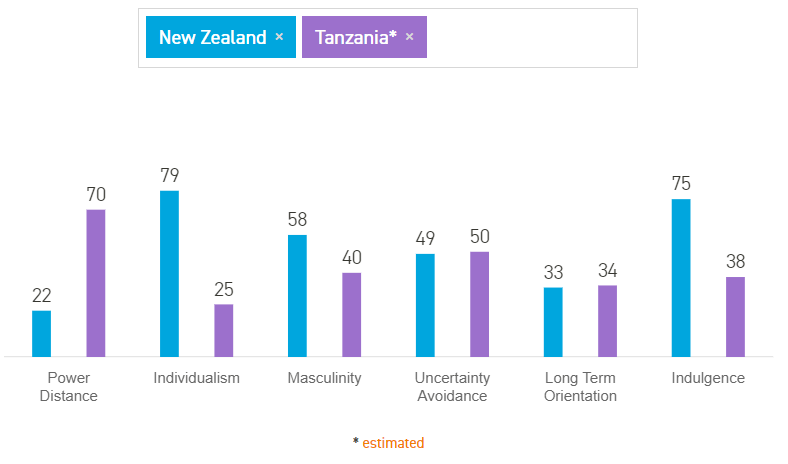
To analyze the cultural differences that could lead to challenges of entering the Market, we will use the popular country comparison tool from Hofstede-Insights. This Europe-based consultancy provides valuable information on culture data from countries all around the globe that can help organizations manage cultural differences and overcome intercultural and organizational challenges.
Let us make sure to take notice that the information about Tanzania is marked as estimated, signifying that the consultants providing the data did not conduct sufficient cultural observation to guarantee the legitimacy of the data. However, we will still compare the provided information to identify significant differences in cultural corner pillars and prepare our mindsets accordingly for our business trip.
The first major difference we identify between New Zealand and Tanzanian culture is the power distance allocation. While in our culture organizational hierarchy is just a formality and subordinates are seen as equal partners by their superiors, Tanzanians are hierarchy-oriented and stick to acceptance of strict role distributions. So what exactly does this insight imply for us? We need to be aware that business is done differently in Tanzania. Business superiors will most likely make decisions without consulting with their subordinates beforehand, so we will need to invest our energy in finding ways to convince the person on top of the hierarchy. Recognizing and respecting the hierarchical order is essential, so at the beginning of business meetings, we should greet the person with the highest position first, then downwards according to position ranking.
In New Zealand, people are rather individualistic. We value our independence, focus on our own goals and needs and tend to place our self-interest over the collective interest in everyday life. Tanzanian culture, however, is quite the opposite of ours. They are focused on the collective well-being of their society, consider the collective interest before acting and tend to stick with social norms and traditions to uphold social harmony. This insight will help us understand our potential customers and their purchasing motives better. For example, this suggests that locals will most likely show a higher likeliness of purchasing chocolate that was manufactured with ingredients from local farmers, as this local support will contribute to the overall economy of the country, thus creating a collective benefit.
We also note that masculinity dimension is slightly lower in Tanzania, which can be considered as an indicator that they have a higher preference for cooperation, modesty and flexibility and care more for the weak than we do in New Zealand. What this implies for us is that success in business with Tanzanian organizations is more likely to be achieved through negotiation and collaboration. In addition, they will put more value in the flexibility of their work environment, meaning they might re-schedule meetings shortly beforehand, ask for more flexible conditions in their contracts and have commitment issues.
As Uncertainty Avoidanceand Long-term orientation are at the same level in both countries, we won´t analyze these dimensions. However, we also note that there´s a significant difference in indulgence, indicating that New Zealand encourages free gratification of people´s individual drives and emotions, such as enjoyment in life, which underlines the individualist nature of our country that we analyzed in the first section. In Tanzania, however, there seems to be more emphasis on suppressing gratification and a higher focus on the regulation of people´s conduct and behavior with stricter social norms. This shows us that we should act according to general business codes of conduct, avoid talking about our private life and avoid making jokes when engaged in formal meetings.
Now that we have discussed subordinate differences and similarities between Tanzania and our home country, let us have a look at the challenges regarding the marketing of our product we might face due to the aspects we discussed when we created Tanzania´s cultural profile.
Languages – Due to Swahili being Tanzania´s national language and English only being used in some areas of every day life, OCHO might be facing communicational challenges in product packaging and communications. To overcome these difficulties, translations might have to be implemented. The language hurdle might also pose a challenge to overcome during our business trip and slow down our work. Please also bear in mind the literacy rates we analyzed in our second blog entry, so it might be beneficial to look into a more pictographic way of communicating with potential Tanzanian customers.
Color symbolism – The cultural profile underlines that Tanzanians tend to link colors to direct meanings. The implication I draw from these color symbolism patterns is that color decisions in our packaging and communication should be well-thought through. Especially the color red seems to become problematic, as there are contradictive ways of association. To avoid creating the negative association, OCHO might want to consider staying away from this color. As green could be falsely associated with medicine, this is a color that might not be the best choice for communicating the benefits of our product. Colors we should look into are blue and black, as these seem to be most compliant with the value and purpose of our products.
Relationship with chocolate – For decades, the distinctive flavour of Tanzanian cocoa has been gaining attention from the international chocolate world. Cococa contributed to household income more than any other exported crops. While chocolate was perceived as casualty in many countries, journalists exposed the ongoing exploitation of African cocoa farms, where children were enslaved to harvest the crop and inhumane prices of 2$ per day were paid from international chocolate manufacturers. This was one of the reasons why Africans lived below the poverty line and could not afford to taste the outcome of the beans – until recently, with the rising economic growth of many African countries – including Tanzania. This historical development is still in the minds of Tanzanians. That combined with their national pride is the reason why they prefer consuming goods with ingredients that were sourced locally. They are looking to support their own country and its economic upturn, which underlines the insights of Tanzania´s ´independence´ dimension. This mindset might pose the biggest challenge for OCHO to overcome.
Obviously everyone is unique and this model and the cultural profile won´t apply to each and every single person within a culture. However, we can use insights from our analysis to make the unknown less intimidating, avoid mistakes that could harm our company´s reputation and provide a confidence-boost when meeting people in an unfamiliar country.
If you still feel a sense of uncertainty and would like to learn about Tanzanian culture tips from someone who experienced their culture live, I recommend watching this video:
The first principle of going international is to recognize and appreciate the diversity of countries in the global economy. One might even say that cultural barriers are the most important ones when entering a foreign market. I can not emphasize enough the importance of understanding the foreign market´s societal culture, as it represents an invisible market factor crucial for the success of the market entry. Culture being an invisible concept makes it far more difficult to develop an understanding of it, unlike other explicit market entry barriers such as tariffs and inspections. So what exactly will we require this cultural sensitivity for? For one, societal culture is closely interrelated with business culture. It will help us understand organizational practices and corporate cultures of our potential business partners in the foreign market and help us prepare for business meetings and deals by giving us an idea of their underlying thoughts and motivation. In addition, it will help us recognize potential customers´ wishes and desires so that we can stay on the right side of social etiquette with our communication channels and marketing tools.
According to theculturetrip, Tanzania is a largely homogeneous society that is rich in old cultures and traditions. Tanzanian culture is Swahili (Arab/African mix), but Asian communities such as Indians are also present. Rural areas are majorly inhabited by tribes and a variety of religious beliefs are represented all around the country. What this signifies is that we should focus on learning about Swahili culture primarily, while maintaining awareness of cultural influences by other minority groups that we might be confronted with.
Languages Swahili is the national language of Tanzania, however, the two official languages are Swahali as well as English, which is due to previous British colonialization. English typically occurs in higher education, governmental administrative services and in commercial communications. The fact that 130 other languages are spoken within the country should be considered for business decisions.
Greeting and Table Manners Locals are generally known for being friendly and kind to visitors. The correct way to greet and part with locals is per handshake throughout the whole country. Please bear in mind that this should be done using your right hand. Overall, we should make sure to keep our left hand to ourselves, as Tanzanians only eat with their right hand and expect guests to do the same. The underlying cultural belief is that the right hand is clean, making it appropriate for picking up food and greeting people, whilst the left hand is considered as dirty and is used majorly inside the bathroom. While we already cut into the topic of table manners, let us bear internalize that in Tanzania, cultural beliefs dictate that food is only smelled if there is something wrong with it, which is why sniffing food is considered as highly insulting to the cook. Ignoring these table norms could be a deal-breaker for business dinners, so please avoid them.
Everyday behaviors and dress code Tanzanians tend to have strong family ties and a traditionally upheld respect for elders. Children are generally raised with the discipline to adopt these respecting behaviors. The ability to control one´s anger in public is highly valued and therefore an integral part of the upbringing of Tanzanian kids, so chances of experiencing public anger outbursts are very low. Every person has heard the term ´hakuna matata´ at least once in their lifetime from The Lion King movie. But have you ever wondered about which language this term originated from? In fact, it is Swahali and can be translated as ´no worries´ or ´no problem´. In Tanzania, the ´hakuna matata´ lifestyle is implemented in cultural behaviors, with a strong reference to time. You will notice that Tanzanias do not rush and do not appreciate being rushed to do things. Another aspect to consider is asking for permission before taking a photograph, as some ethnic groups in the country believe that the flash of a camera steals a piece of their soul. Therefore, an unauthorised photograph might be a traumatic experience to them and will most likely cause them to leave. Just like in most western cultures we are familiar with, tipping culture is also present in Tanzania and the general expected amount of tipping is at 10%. As most parts of the country are strongly influenced by Islamic religion, alcohol is not available in Tanzania, except for tourist areas in Zanzibar. The dress code in everyday life is casual, however, a professional appearance is appreciated for formal occasions such as business meetings or high-class restaurants. Colors and their symbolism Let me introduce you to Tanzanite. These stones are up to 585 million years old and have a very high value with over 2,000 USD per carat.
Being one of the most popular gemstones after diamonds, rubies, sapphires and emeralds, these stones that can only be mined in Tanzania are high in demand on the global gemstone market. Tanzanite is therefore the pride of Tanzania and their culture involves a special meaning of its typical rich and royal blue color. For example, a custom that has been passed on for generations is that women who have just given birth wear blue beads and blue fabric to bestow a healthy and positive life upon their newborns.
The cultural beliefs of Maasai largely influenced Tanzanian culture throughout history, which is why there is a perception of symbolism regarding some colors. For example, dark colors such as black and dark-blue are associated with elders and wisdom, whereas the color red is symbolic of youth and energy, but at the same time can be associated with impatience and even anger. Another significant color of symbolic value is green, which is perceived as a sign of peace and healing, as the color is strongly associated with living in harmony with nature. The color is also linked to medicine, as traditional plant-based medicine practices are wide-spread in Tanzania.
Role of chocolate Tanzanians´ relationship to chocolate is majorly based on the cocoa plantation and its exports. For many decades, chocolate was perceived as a luxury product and the country´s population, as well as cocoa farmers, never even got to taste the delicious results of their processed cocoa resources. However, due to the increasing economy and wealth within the country – which cocoa exportation played a significant role in – chocolate started to recently gain popularity in urban areas. The forecasted rapid growth of the Tanzanian confectionery market by 9,6% annually promises future business opportunities for foods with high sugar content, especially chocolate. What could be of particular interest to us except for everyday life consumption of chocolate is whether or not there are special occasions that involve high-quality chocolate consumption and gifting. To find out more about this topic, I did some research on Tanzanian traditions in respect to their marriage culture and other special occassions. Tanzanian marriages are traditionally pre-arranged by parents of the bride and groom. Marriage customs often include a price to the wife´s family from the groom´s family side. The dowry is negotiated between the families and may include a variety of items like livestock, money, clothing and others. I only found limited literature on this topic, however, my suggestion would be to investigate locally whether or not high-quality chocolate is a considerable dowry option in urban settings. As Tanzanian culture is influenced by Islamic religion to a large extent, it can be expected that during the Feast of Ramadan (which is directly after the fasting month Ramadan), Tanzanians will most likely present friends and family with luxury chocolate, as is the custom practice for Arabic-influenced cultures all around the world. I did find several e-shops similar to this one where people can order premium gift baskets to Tanzania for all types of occasions, such as anniversaries, birthdays and post-birth gifts. I could not help but notice that most of these baskets contain premium chocolate in small sizes. The availability of such products in Tanzania indicates that there must be demand for these, because according to the rule of thumb, there´s no supply without demand.
To get a better impression of the town we´re going to visit, I strongly suggest to check out this Instagram page that regularly posts content about life in the booming city of Dar Es Salaam, including popular attraction sites, popular street foods and restaurant recommendations. Alternatively, to gain a visual insight on Tanzanian Lifestyle, I recommend having a look at this video:
Please note that the enlisted cultural patterns are the result of secondary ´desk´ research. They will, to a certain extent, prepare us for our Tanzanian visit project and our meetings with local businesses. However, accessing and experiencing cultural knowledge locally will help us gain deeper insights that will be far more beneficial and accurate for all aspects of our market entry plan.
To give you a heads up – this article will be a hassle to read, as it contains a lot of numbers and statistics. However, these will have significant implications for OCHO´s entry and marketing decisions, so grab a bite (and a drink, if you´re reading this at home) and enjoy.
Let us first have a look at some demographic facts of interest. Tanzania´s population counts around 58.5 million people with an annual growth rate of 3%. The majority of the population is of young age, with around two-thirds being below the age of 25. What this implies is basically that we have a wide scale of potential future customers, as people within this age group typically show strong tendencies towards a passion for chocolate. According to UNESCO, the country has an overall literacy rate of around 78% for Tanzanians aged 15 and over, who can read and write Swahili, English or Arabic. However, what jumps the eye in the statistics is the significant gap between sexes, as the male literacy rate is 83% while female literacy is at 73%. This goes hand in hand with the country´s expected fertility rate of 4.6 children born per woman in 2020, pointing out the conservative gender roles within traditional Tanzanian culture, where women primarily inhibit the role of mother and housewife and are expected to prepare food, care for children and for livestock while the husband provides for the family and makes important financial and social decisions on their behalf. Nevertheless, the traditional roles of women are experiencing a change, especially in the urban areas due to an increase in female education, modernization of the country and migration from rural to urban areas. We should keep these social factors in mind, as they will have significant implications that require consideration in our marketing decisions at a later time.
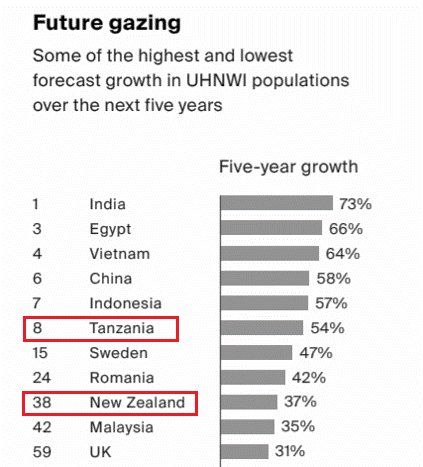
The country´s economy is rapidly rising by 6-7% annually, with a GDP of 3.200 USD (~5.100 NZD) per person. A promising growth at first glance, but let us have a look at our desired market. According to the International Monetary Fund, Tanzania is estimated to have a GDP per capita (based on purchasing power parity) of around 3,560 USD in 2020 and is forecasted to reach 4,380 USD by 2024. To put it in a simpler way, these numbers show the relative purchasing power of the average income in their home markets. Let us now compare the values with New Zealand, which is expected to show a GDP per capita (PPP) of 47,116 USD in 2024. An astonishing difference which indicates that New Zealanders have a 10x higher level of productivity on average, thus having a higher average level of wealth within the population. The country remains one of the poorest countries in the world and is forecasted to be ranked number 211 regarding world GDP prognosis for 2020 by World Population Review. Yes, Tanzania has demonstrated enormously high growth in the past years, but that growth is not for all, which is why poverty and equality are still a big issue in Tanzania. But don´t be discouraged yet! The World Bank confirmed that this poverty is mostly associated with rurality, as over 80% of the poor in Tanzania live in rural areas where they mainly depend on subsistence agriculture for their livelihoods. They further highlighted major disparities in the distribution of poverty in different regions inside the country. For more clarification, poverty ranges from as high as 45% in Ruwkwa to as low as 8% in our city of interest Dar Es Salaam, which showed a substantial improvement from its previous 14% in 2007. To summarize, we understand that the poverty rate is significantly low in Dar Es Salaam in comparison to other cities in Africa, but what about the wealthy residents? The Wealth Report 2020 shows that the number of high-net-worth individuals (HNWIs) from Tanzania with 1m USD rose from 5,1 to 5,5% within the last year. What is even more interesting is that the report forecasts that the number of Tanzanian ultra-high-net-worth individuals (UHNWIs) holding 30m USD or more, will grow by 54% over the next five years, after being at 114 in 2019. What can be expected is that these UHNWIs will invest their money into businesses, thus raising overall productivity in the city, which is also directly linked to a higher average salary that raises the purchasing power of the citizens. This growth projection of UHNWIs even beats New Zealand´s 2020 forecast, making the market even more interesting for OCHO:
Figure from The Wealth Report – 2020
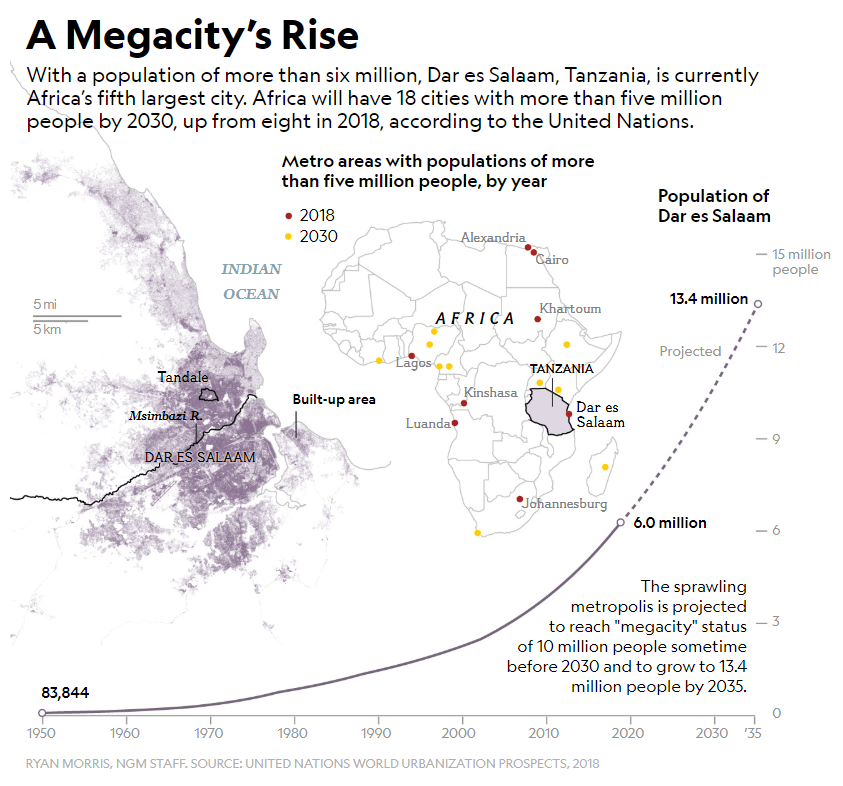
Market Size and Relevant Population Insights To better understand our chances of success with our expansion plan, I analyzed provided data on Statista for the Confectionery Market in Tanzania. With a market volume of 163m USD (~270m NZD), Tanzania has listed number 121 the global market comparison while New Zealand placed number 58 with a total market volume of 899m USD (1,460m NZD), which is surprising when considering that New Zealand only has 8,3% of Tanzania´s population. This gives a first impression of low demand in the market. A possible explanation for this, as Africa is known to be the world´s least urbanized country, could be that 57% of Tanzania´s population are located in tribes in rural areas and only 43% are urbanized. To put this insight into numbers: Dar Es Salaam as Africa´s fifth largest and Tanzania´s largest city only makes up for 9,7% of Tanzania´s total population. This percentage might not sound like it´s much, but in fact, Dar Es Salaam is the second-fastest-growing city worldwide and is forecasted to become one of the world´s most populous. To get an idea of how extreme this growth actually is, have a look at this image that illustrates the city´s growth curve from the past 70 years with the projected numbers until 2030, indicating an exponential growth.
What do these differences in rural and urban population indicate for our project plan? A study published in the journal Science indicates that tribes and rural living communities usually live off of food they find in the forest, such as wild meat, honey and wild berries. They do not eat processed food and have probably not even tried chocolate once in their lifetime, so their dietary habits can give insight into why the market volume is so low within the entire country. You can´t miss the taste of something you´ve never tried, right? Either way, chocolate-eating habits are notably different in Tanzania´s urban areas, especially in our town of interest. According to another study paper I analyzed, findings showed that 22% of children between 12-23 months in Dar Es Salaam consume candies or chocolates, and as the mother´s main reasons for the mother feeding this type of food to their child(ren) it was identified that because it is liked by the child (86,3%) and because it was demanded by the child (9,6%). What we can draw from these insights is that mothers care to buy chocolate for their children starting from a young age, which creates a preference and habit for them over time, making them potential customers for our cause.
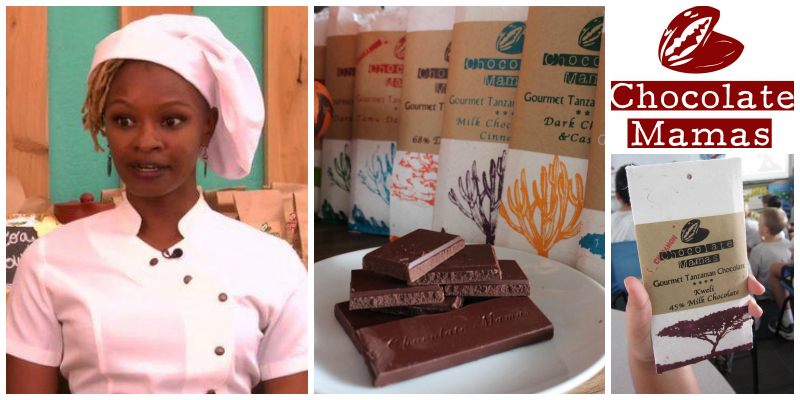
Supply, Demandand Marketplace But how exactly does the demand and support situation look like within the country? In the previous section, we had already analyzed demand by domestic market volume, which showed positive indicators for expansion plans. The New Zealand Trade & Enterprise confirms that Tanzanian household consumption expenditure is increasing by more than 10% annually, which implies that demand for high-quality products is increasing – A development with positive indication for the potential success of our premium quality chocolate assortment. As for demand in Dar Es Salaam, I suggest we put local demand on the list of topics to discuss with local store owners when meeting them for business purposes. I am confident that they will be able to provide insights into their chocolate sales numbers of the past years, which will enable us to make a future prognosis for success of our sales numbers. On the supply side, I could identify the following companies that could be of strong competition to us: Chocolate Mamas Gourmet Tanzanian Chocolate Companyfrom Dar Es Salaam is making big waves on the African continent as Tanzania´s first chocolate producer. Their premium-quality chocolate products are entirely processed in Tanzania, from bean selection and roasting to the final bar. Their competitive advantages include the support of local farmers with fair prices and cultural familiarity and understanding of the Tanzanian customer base due to being a local company founded by a native. Their product range consists of 13 variations of chocolate and is sold in various supermarkets, shopping centres and gift shops around the area of Dar Es Salaam. As of now, the company is only regionally active and does not have a website for e-commerce purposes. However, they are planning to expand into Europe and the U.S. in the future.
Jaki Kweka, the founder of Chocolate Mamas with her products
Other local competitors we should be taking into account are Karuna Chocolate and Aruntam Sensory Chocolate from Italy and Kaitxo from Spain, as they have been rewarded with Gold, Silver and Bronze for the Tanzanian chocolate market. This was decided by a national and regional representative jury as part of the International Chocolate Awards 2019.
Legal Requirements Tanzania is currently politically stable with no history of civil wars, ethnical conflicts or internal uprising, which supports our cause as potential investors. The good news is that Tanzanian law offers protection of intellectual property rights, so it is imperative for us to register our trademark to protect the sovereignty of our brand in the market here. However, just like many other countries, the Tanzanian governments put strict import regulations and procedures in place that need to be analyzed and followed before entering their market. In order to be able to import our goods into Tanzania, our products will have to get examined and approved by the Tanzanian Food and Drugs Authority (TFDA) which governs overall food importation amongst other things. Any organization must register the business premise with the TFDA before commencing business operations within the country and obtain a business license for trading their products. To achieve approval from the TFDA, I suggest we apply for a business permit first while simultaneously registering our products, then send an application for an import permit. The necessary forms for these steps can be found on the TFDA website here. The import license is only given after regulated product controls, which aim to guarantee quality and safety of the food for Tanzanians and prevent the spreads of diseases and pests. An inspector will examine (and hopefully) approve before the distribution in the market. I have organized for a set of samples to be sent out to the TFDA mid-April for laboratory analysis to speed up the approval process. By doing so, I also wanted to make sure that we receive the approval before our trip there so that we have a license enabling us to bring along samples for our business partners. Amongst the content and the quality of our products, they will also analyze whether our packages are compliant with their labeling requirements. I did check their General Standard Codex for the Labelling of Pre-Packaged Foods but could not find any requirement that our current package labels do not already contain. In addition to regulational approval from TFDA, we will have to register OCHO as an importer of food with the Tanzania Bureau of Standards (TBS) here before our first import into the country. As for the import procedure itself, we are required to follow important procedures for clearing the goods from customs control as per East Africa Community Customs Management Act (EACCMA). Importers are obligated to appoint a Licensed Clearing and Forwarding Agent (CFA) to clear the goods from the ships. A list of certified CFAs operating in Tanzania can be found here. The documentation process of the import is done digitally via Tanzania Customs Integrated System (TANCIS) and should be completed at least 7 days prior to the goods´ arrival. 18% VAT will be applied to the sale price of our imported goods.
Why do companies go international? In our global economy nowadays, companies of all sizes establish operations in foreign markets. There are various reasons for a company to go international, but the typical subordinate target is company growth or expansion. The success of international expansion can be influenced by several factors and typically requires a lot of time and planning to steer the strategy´s success into a positive outcome. However, if done efficiently, entering international markets can lead to crucial benefits for organizations.
Improving profit margins is one of the major reasons for expanding to international markets. When the national market has reached a state of saturation and growth strategies are used up just like it is the case for OCHO, the logical next step is to seek growth internationally. This will give us the chance to conquer new markets and to grow our customer base, thus increasing overall sales. Not only does this step offer opportunities to strengthen revenue, but also leads to cost savings per product due to economies of scale, which evidently result in improved profits. We may even manage to build strong customer loyalty across international markets by using a compelling marketing mix.
International expansion will also help diversify our assets. This will protect our company´s bottom line against unpredictable events, by spreading risk among more than just one market. We may even look into utilizing a new market to introduce a new unique product or additional services that we do not offer on our domestic market yet. This diversification might help our company to maintain a positive revenue stream.
Another benefit to be gained through going international is the opportunity to access new talent pools. Recruiting international talent with diverse educational backgrounds can improve our internal marketing, as it would bring innovative ideas into our company and eventually help increase productivity or create innovative ideas. This might lead to the development of crucial strategies that go beyond our perspective from our domestic market. Through recruitment of foreign talents, our employees would learn to co-create with people bringing along different experiences and cultural backgrounds. This would eventually help them expand their views beyond their own country´s borders and stir their work´s point of view into a global direction. Creating these kind of synergies will create sustainable value for the company and pave way to building a global brand.
One of the most important benefits of international expansion is the gain of competitive advantage over rival companies. As an example, expanding into a market where our competitors do not operate yet can give OCHO a first-mover advantage, which allows developping a strong brand awareness with the local consumers before their rivals even have the chance to step foot into the market. Going international will also increase OCHO´s perceived image based on increased brand recognition in the new markets. This can support our cause in future business scenarios and will prove to be beneficial when it comes to contract negotiations, new marketing campaigns and even further expansion into bigger markets.
Last but not least, we should not forget about the additional investment opportunities that international expansion can open ways to. OCHO might be able to develop new resources and build important relationships by operating on a foreign market. This is exactly what we are going to investigate in Dar Es Salaam, the possibilities and likeliness of these opportunities by doing first-hand research. Who knows, we may persuade one or two investors who truly believe in our brand and what we stand for!
As you might have noticed by the context already, going international will require adequate coordination of the internal marketing. Our employees should be viewed as ´internal customers´ who require convincing for changes in our company´s vision and operations and should be made belief that it is going to create increased value for them. This will require us to communicate the possible benefits of our international expansion plan to them and prepare them for what is to come and what is going to change. We need to promote a transparent work culture where we share OCHO´s future goals and strategies on the targeted foreign market way before actually doing so. Being prepared and believing in the success will increase our employees´ emphasis and motivation and will make them see OCHO in a positive light, which they will carry outside of the company, thus directly affecting (potential) customers on the local market.
Besides the attainable benefits that have been highlighted, marketing outside national boundaries can also pose challenges for OCHO, such as dealing with multiple environments, coordinating operations in distant markets and dealing with foreign businesses. These challenges will evidently affect our domestic market. We are going to have to make important decisions on how to spread our resources across both markets and whether or not to change elements of our product overall to make it match the requirements of the new market environment. Fundamental changes in our operations may also influence domestic price and supply. An additional aspect to consider is that we may draw attention to New Zealand and build a reputation for our country in the foreign market by spreading our high-qualitative products with New Zealand origin. This might attract new investors or businesses into the country and may benefit our national market on a long-term perspective. Other New Zealand companies looking to enter Tanzania may also benefit from this established perception. However, attaining a good understanding of a foreign market will also enable us to develop a more profitable marketing mix. In return, these attained experiences and tools will help to consolidate our domestic market position and ideally enable us to take on the risk of trying new marketing strategies within our domestic territory.
As the budget for this project is limited to 25.000$, an intense travel preparation is required. To maximize the efficiency of our project, we will now take a closer look at the requirements of travel and budget for the country investigation.
Climate According to the climate information about Dar Es Salaam, the local climate is characterized as tropical and temperatures vary by only 4.1 degrees throughout the year. There are two major rain periods from March to May and from November until December, so we will look into a travel plan between June and October to avoid travel discrepancies such as flooded roads and to keep our heads and clothes dry.
Visa A visa is required to enter Tanzania. For our project, we require the Single Entry Business visa, which is valid for 90 days and can not be extended. The visa can be requested online here. The processing takes around 10 business days and the price amounts to around 320 NZD per person. Several document copies are required for the application process, including a cover letter stating the purpose of visit to Tanzania. I will prepare this letter until the end of next week.
Health & Safety Our HR policy requires us to do a thorough Health & Safety risk analysis before going abroad for a longer period of time. Taking precautions based on the results of this analysis will guarantee an uninterrupted project realization and help to reduce the travel risks for the affected employees. I understand that OCHO has an automated request process for business travel insurance, which makes our job a lot easier. However, the living conditions of African countries are very different from ours and we need to be prepared to avoid unpleasant surprises.
On the website smartraveller.gov.au I found following important information regarding Health aspects that we should consider:
The country has limited medical facilities and medicine is scarce. In case of illness, evacuation to another country may be necessary.
The danger of being infected with Malaria is present year-round and a single sting from a mosquito is enough to get infected, which is why bringing anti-malarial medication is crucial.
Yellow fever can occur.
HIV/AIDS is widespread, so precautions should be taken to avoid infection (i.e. immediately bandaging an open wound).
I scheduled an appointment with a health professional for my travel companion and I on 20th April, 9:00am. He will provide advice and recommendations about necessary vaccines, medicine and precautions before our journey.
The same website provides essential safety aspects relevant to our project. They warn that violent armed robbery, petty theft and threats of violence are very common in Dar Es Salaam. Bag snatching from vehicles is to be expected and in worst cases, victims may be injured or killed, which is why it is advised not to resist bag-snatch attempts. This might prove to be difficult, as defending own property is a natural instinct. I therefore suggest that HR should schedule a training for us to ensure we are adequately prepared for these kinds of scenarios. It is also recommended to only use registered taxis, as criminals target travelers using unlicensed ones. Risk of credit card fraud is also common in Tanzania, which is why it is essential for us to always keep our credit card in sight and not use ATMs on the street, but in banks or hotels. And last but not least, swimming is also off the table as going for a dive in lakes and rivers entails the risk of an animal attack or waterborne disease, which is not further classified.
Flight Let us summarize: We limited the visit time frame from June to October due to the climate and we found that the visa duration for our project visit is limited to 90 days. But is a 90-days business trip really necessary? The answer is YES, as we should gain a deeper understanding of the local market conditions, especially in regards to chocolate. Furthermore, it is essential that we get to know cultural norms to learn about the local consumer behaviours and expectations, and we also need to build relationships with potential business partners such as wholesalers, retailers, media channels and even the competition for potential future collaborations. Building lasting relationships is crucial for our market expansion and is not simply achieved after one or two meetings, but requires commitment to meeting regularly over a longer period of time. To diminish subjective bias and for security reasons, I suggest to send two people out for a business trip of three months.
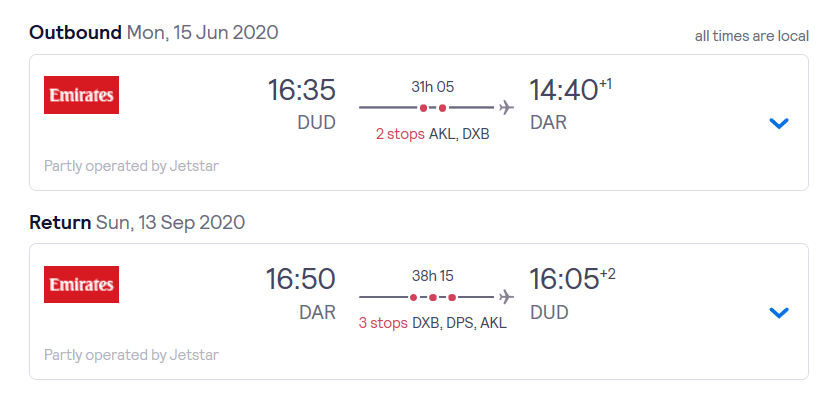
Taking these considerations into perspective, I looked for flights from June to September. I researched several travel agency websites like WebJet, Trivago and Skyscanner for flights from Dunedin to Dar Es Salaam and concluded that the tickets were within a price range from 5,000 to 5,500 NZD for two people, Business Class. Here is a suitable example for one of the cheaper flights that we can book for two at a price of 5,130 NZD in total.
Emirates´ Baggage Allowance is 32kg (one suitcase) of luggage and 7kg cabin baggage per person, which is sufficient for casual as well as business clothing for our stay without the need for an upgrade. Talking about our baggage, other items besides clothing and our work equipment that we should not forget to pack are:
A good stock of business cards (I would suggest around 200), to hand them out to our business partners for a professional appearance.
Samples from our products, to give our clientele the opportunity to taste what they´re signing up for and because…
“There is nothing better than a friend, unless it is a friend with chocolate.”
THE PRINTWICK PAPERS
For our safety, a first-aid kit and essential medicine should be packed, such as pain killers, anti-diarrhoeal agents (Let´s hope we won´t be needing these ones!) and anything else our GP recommends for our travels.
To avoid the risk of a climb in ticket prices, I would usually suggest booking the flight right away. However, with the present uncertainty of the development the COVID-19 virus, I recommend we wait until the end of May to book this flight and consider the chance of a rise in the cost of at least +20% – Better safe than sorry! The return ticket should also be booked as a flex, in case the country or city goes on lockdown and there is no point in us staying there. I recommend we take an airport shuttle from Airport Shuttles Dunedin to catch the flight. In Tanzania, the hotel mentioned below can organize a pick-up from the Dar Es Salaam airport. We should call them a week before our flight to get that sorted.
Accommodation As we offer premium quality products, we should make sure to choose accommodation that fits what our company stands for. By doing so, we will not lose face with our clientele if they ask about our place of stay or if they offer us a ride home. As this is a business trip, it is important for us to maintain a normal workplace routine for maximum productivity and to achieve that, there are a few criteria we should consider when selecting a hotel option:
A stable internet connection in the lobbies as well as in our bedrooms with no daily data restrictions is essential for us to carry out our project.
The hotel should also offer adequate workspace for us, such as a desk in the bedroom or even give options to book meeting rooms or at least meeting pods in their common areas.
Another criterion to consider is proximity, as traveling from and to the hotel can be a hassle. The accommodation should be centrally located to save travel time and enable us to use public transport. An additional bonus for living in the center of a town is that we will get the best insights into the culture by staying in the heart of Dar Es Salaam.
As we won´t have much time (or the necessary skills) to cook for ourselves, it could be beneficial to look for a hotel that offers healthy and nutritious meals. We won´t want to waste time in the morning to go looking for a place to have breakfast at, so reliable room service and breakfast buffet options should definitely be included.
This one is rather optional, but to maintain our regular exercise schedule and remain physically fit, fitness facilities on site would be nice to have.
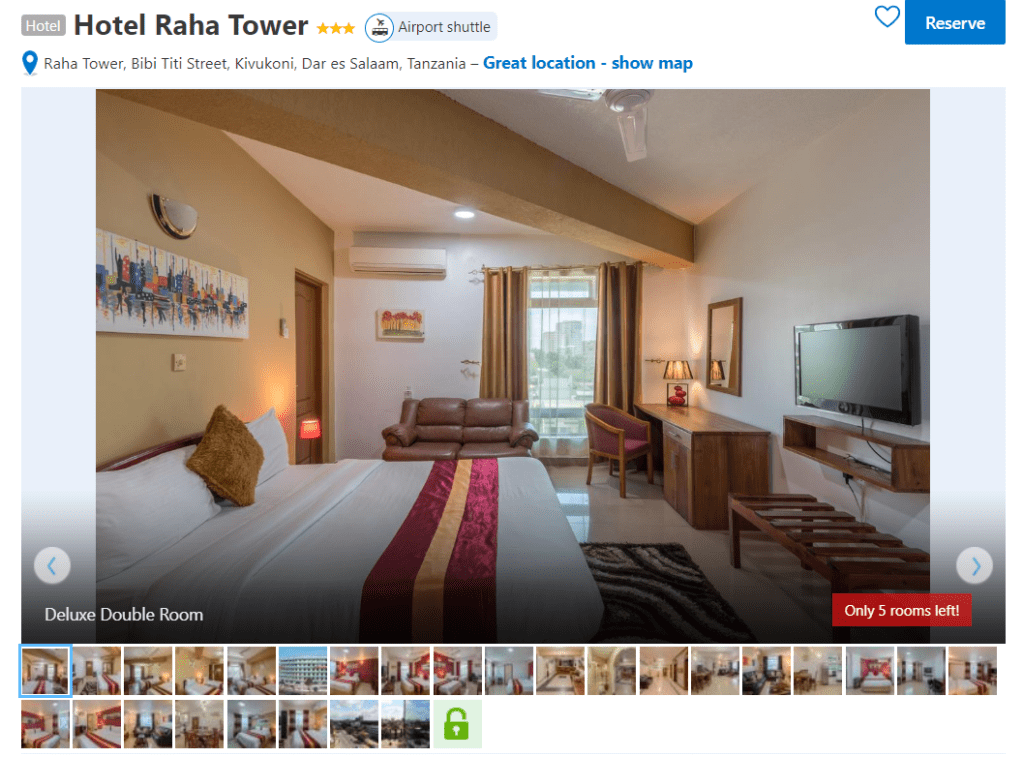
As expected, it was impossible to find a 5-star hotel that fulfills all criteria, but when browsing through websites that offer hotel room bookings online such as hotel.com and booking.com, I came across this offer from a 3-Star Hotel located in the center of the city that I found suitable for our project:
They offer a two-bedroom apartment with free, unlimited WiFi all around the hotel, including daily continental breakfast for 4,270 NZD per month, which will add up to a total of 12,810 NZD for our entire stay. Both bedrooms include a desk each, so we will have an individual space to work from. The hotel features an à la carte restaurant and offers its customers a 24-hour front desk service, so we always have someone to contact if we are in need of advice or help. According to the website, business travellers rated the hotel 8.4/10 for work-related trips. Special services such as daily housekeeping, trouser press, ironing service, laundry and dry cleaning are included in this offer, which will enable us to meet our business partners crinkle-free. For an additional charge, we can also host our business partners by booking a meeting room within the hotel. All facts considered, this accommodation option fulfills 4 out of 5 criteria I set before the search and I therefore strongly suggest booking it right after the confirmation of the flight tickets. Just in case anything does not go according to plan, they offer free cancellation before 6pm on 16th June.
Total Estimated Travel Budget Now lets summarize all of our travel costs:
Business Visa for two – 640 NZD
Flexible two-way flight tickets – 5,130 NZD
Shuttles from / to the airport (both countries) – 100 NZD [estimate]
Accommodation incl. breakfast – 12,810 NZD
Monthly living costs (without rent) in Dar Es Salaam for 3 months, 2 people – 4,860 NZD
This amounts to an anticipated total of 23,540 NZD, leaving us with a bit reserve for booking meeting rooms in the hotel, inviting our business partners for dinners or other expenses that might be required. In case there are clear indicators that the market entry will not be successful for OCHO, the hotel´s policies and our flexible flight ticket will allow us to prematurely cancel our trip for a small fee.
Around two weeks before we get started with our travels to Dar Es Salaam, I suggest we watch this video that explains DOs and DONTs we should be considering within the country. This lovely lady also teaches a few words in Swahili and as the locals are very keen on strangers who go the extra mile and speak a bit of their language, knowing and using these might give us a few bonus points from the get go.










 Investigating market opportunities in Tanzania for Ocho Chocolate Company